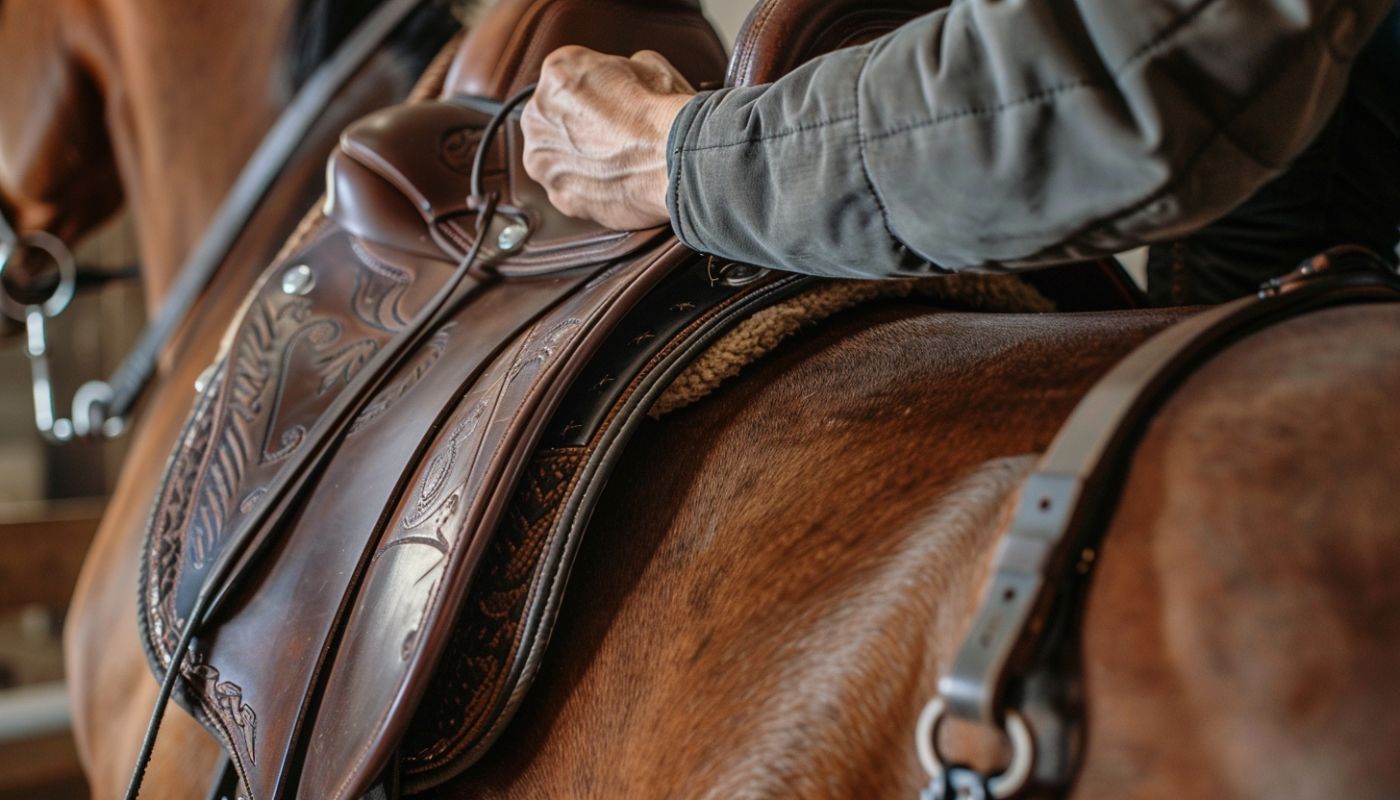
Each horse has a unique back shape. It’s crucial to understand whether your horse has a straight, concave, or convex back, as this will influence the choice of the appropriate saddle.
Wither Height
Horses have varying wither heights, ranging from high to low. The saddle should be properly fitted to the withers to avoid pressure points.
Choosing the Right Saddle
Type of Saddle
The choice of saddle depends on the riding discipline you practice. Ensure you choose a saddle suitable for your needs, such as dressage, jumping, or all-purpose.
Gullet Width
The saddle’s gullet must be adjusted to the width of the horse’s back. A gullet that is too narrow will put pressure on the withers, while one that is too wide can lead to saddle instability.
Fitting the Saddle
Saddle Placement
Place the saddle on the horse’s back without a pad. Ensure it lies flat on the back without creating pressure points. Check for adequate clearance between the saddle and the withers – there should be enough space to fit two fingers.
Saddle Positioning
The saddle should sit naturally on the horse’s back without shifting forward or backward. Ensure the saddle panels make even contact with the horse’s back.
Test Ride
Comfort Assessment
Conduct a test ride with the new saddle. Observe the horse’s behavior – look for signs of discomfort such as stiffness, head tossing, or sidestepping.
Fit Check
After the ride, check for any signs of rubbing or redness on the horse’s back. If you notice any issues, the saddle may need to be refitted
Consultation with a Professional
Saddle Fitter
If you have any doubts about the saddle fit, it’s worth consulting a professional saddle fitter. An expert can assess the saddle’s fit and make necessary adjustments.
Regular Check-Ups
Remember that a horse’s body changes over time. Regular saddle fit check-ups, especially after changes in the horse’s condition or weight, are crucial for maintaining an optimal fit.
Fitting a saddle to a horse is a process that requires attention and precision. Understanding the horse’s anatomy, choosing the right saddle, thorough fitting, and regular check-ups are key steps to ensure your horse’s comfort and health, as well as your riding satisfaction. Investing time and resources into proper saddle fitting will benefit both you and your equine partner.